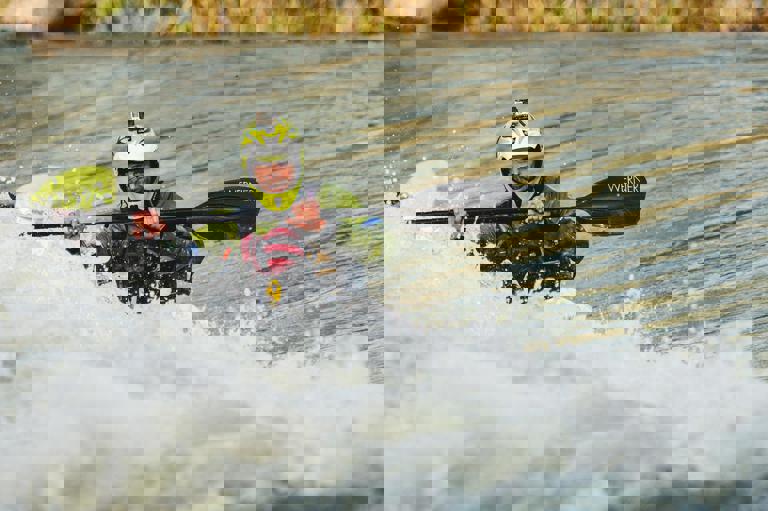
Under a mist-laden Canadian dawn, a team of six kayakers launched their boats into the icy waters of Quebec’s Rivière Noire, determined to conquer a stretch of river almost lost to time. Known among seasoned paddlers for its unpredictable currents and untamed beauty, the Rivière Noire has faded from adventure maps in favor of more accessible routes. Yet, its hidden rapids have quietly beckoned to those craving wild adventure off the beaten track.
Few people have attempted to document journeys down the Rivière Noire in recent decades, largely because large sections are remote and challenging to access. Adventurer Élodie Tremblay, leading the expedition, explained, “We wanted to remind Canadians that wild places like this still exist—and that they need to be protected and experienced.” Their mission was to capture both the river’s perils and its unspoiled beauty for a documentary project set for release next year.
Preparations for the journey began months in advance. Logistics were daunting: their route snaked through dense boreal forest, with no road access for nearly fifty kilometers. The group carried all supplies in dry bags, relying on topographical maps, satellite phones, and expert local guides. Each member brought unique expertise, from wildlife biology to whitewater navigation, ensuring a balanced team prepared for any eventuality.
As the kayakers progressed, the river quickly proved its reputation. Rain-swollen spring waters churned over jagged boulders, creating frothy, Class IV rapids that tested every stroke. “No training can fully prepare you for the sheer power of these rapids,” said paddler Marc Gagnon. “Every wave is both a challenge and an invitation to engage with the river in its wildest form.” Safety protocols were strictly observed at every rapid.
Beyond technical difficulties, the group also contended with unexpected wildlife encounters. On the second day, a black bear appeared at the water’s edge, eyeing the paddlers before disappearing silently into the woods. Eagles soared overhead, while beavers watched from the banks. Member Camille Poirier, a wildlife biologist, documented numerous animal tracks along muddy shores, suggesting a thriving, untouched ecosystem.
The ever-present risk of hypothermia added another layer of tension, with water temperatures hovering just above freezing. Careful planning guided the team’s choice of gear, from advanced dry suits to emergency thermal blankets. Nights were spent in lightweight tents, with hearty Quebecois meals prepared to keep energy levels high. “We could see the condensation freeze on the tent fabric overnight,” recalled paddler Felix Lavoie.
Navigation also posed major challenges, as overgrown portage routes sometimes forced the group to bushwhack through thick undergrowth. Occasional fallen trees blocked the river, requiring the kayakers to improvise safe passages. “You need a mix of ingenuity and patience to move forward,” said Tremblay. The team tracked progress using GPS and regular voice updates recorded for the documentary.
Despite hardships, the mood among the paddlers remained upbeat. Evening campfires became opportunities to recount the day’s trials and share stories. Laughter and camaraderie lightened the most difficult stretches, reinforcing the value of teamwork in such remote environments. For many, the sense of community was as rewarding as the technical achievements. One participant joked, “What’s more Canadian than bonding over a wild river and a mug of hot coffee?”
Their experiences highlighted the seldom-seen character of the Rivière Noire, blending ferocious power with moments of tranquil reflection. Calm stretches revealed mirror-like water reflecting ancient forests—scenery few ever witness firsthand. Filmmaker and team member Luc Morin noted, “This isn’t just an adventure. It’s a cultural exploration of Quebec’s raw and mostly forgotten landscapes.” The footage aims to inspire new appreciation and protection for these wild places.
The journey ended at an abandoned logging outpost, where weary but triumphant paddlers celebrated with one last meal together. There was consensus that the expedition had not only tested their physical limits, but also deepened their appreciation for Canada’s unique wilderness. They hope their documentary will serve as a call to preserve rivers like the Rivière Noire for future generations eager to experience authentic adventure.
In post-expedition reflection, the group has already begun editing hours of footage featuring roaring rapids, intimate wildlife encounters, and poignant interviews about why wild rivers matter. They are seeking collaborations with conservation groups to maximize the documentary’s impact. “We owe it to future explorers and wildlife alike to keep these places wild,” said Poirier. Their journey down the Rivière Noire stands as proof that even the forgotten corners of Quebec are worth rediscovering—and safeguarding for the years ahead.