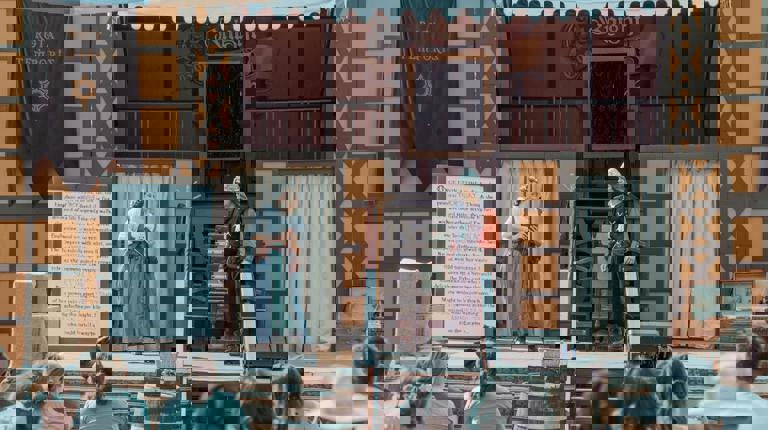
Every summer, Montreal’s arts scene erupts with vibrant color and sound, but this year’s buzz centers around a unique theater festival celebrating French-Canadian folklore. Held in the heart of the city, the festival showcases beloved folk tales, but with a contemporary twist. Audiences are treated to inventive stagings and diverse casting that breathe new life into stories traditionally told around campfires and kitchen tables across Quebec.
Festival director Chantal Desjardins explains, 'We wanted to honor our roots but also acknowledge the evolving identity of Quebec.' Her vision manifests in productions featuring innovative set designs, digital backdrops, and multicultural performers. Many of the plays, she notes, reinterpret old legends such as 'La Chasse-Galerie' and 'Le Loup-Garou' in a way that resonates with young, urban audiences as well as older generations steeped in the tradition.
Critical response has been overwhelmingly positive. Prominent theater critic Félix Allard writes, 'Rarely have I seen folklore presented with such verve and imagination.' He praises both the set pieces—gorgeously rendered with recycled materials and interactive projections—and the performances, which blend French-Canadian dialects with English and other languages heard in Montreal’s streets. This linguistic fusion highlights the city’s rich diversity.
Attendance numbers tell a similar story of success. Festival organizers report that ticket sales have increased by 35% compared to last year, drawing both locals and tourists to the venue. 'We’re thrilled to see so many new faces,' Desjardins says. She attributes this growth to a combination of word-of-mouth buzz, social media marketing, and the universal appeal of classic tales presented in new and accessible formats.
The festival’s reinterpretation of folklore challenges traditional narratives in more ways than one. In several productions, roles that were historically played by men are now filled by women, and nonbinary performers take center stage. 'These stories belong to everyone,' says actor Camille Tremblay, who stars as a gender-swapped lumberjack in a modern take on 'Ti-Jean and the Devil.' She says audience reactions have been 'motionally charged and overwhelmingly supportive.'
Educators and cultural commentators in Montreal see the festival as an important bridge between generations. Professor Rémi Bouchard of the Université de Montréal notes, 'Our folk tales help ground us in our history, but seeing them through a modern lens ensures they remain relevant.' He applauds the festival’s workshops, where children and teens learn about storytelling, stagecraft, and the traditions of francophone Canada in participatory sessions.
The reimagined festival sets have become a talking point in themselves. Set designer Louise Martel describes constructing a floating canoe for 'La Chasse-Galerie' that soars above the audience, symbolizing both Quebec’s river heritage and its forward-looking imagination. Martel remarks, 'We’re drawing from our natural environment—wood, stone, water—and merging it with cutting-edge technology. The result is a dreamscape that feels both ancient and utterly new.'
Beyond showmanship, the festival is also a platform for exploring deeper themes. Several plays grapple with issues such as migration, environmental stewardship, and linguistic identity. Playwright Marc-Antoine Gervais says, 'These legends are not just ghost stories or moral lessons—they reflect our anxieties and hopes as Quebecers navigating a globalized world.' This approach, he believes, has struck a powerful chord with viewers.
The festival’s commitment to cultural inclusivity extends to its outreach efforts. Organizers have partnered with local schools, Indigenous groups, and immigrant communities to create collaborative events and talkbacks. This inclusivity is evident in the casting choices and story adaptations, with several productions highlighting the meeting and blending of traditions. Audience member Malika Sylla commented after a performance, 'I saw myself on stage, in a folk story I’d never heard before.'
Funding and sponsorship have also played a key role in the festival’s expansion. Support from the Canada Council for the Arts and several Montreal-based businesses has enabled organizers to stage larger productions, offer pay-what-you-can nights, and commission new translations and adaptations. Desjardins expresses gratitude for this support, emphasizing that it allows for broad access and ongoing artistic experimentation.
Looking forward, plans are underway to tour select productions across Quebec and into other French-speaking regions of Canada. The hope, organizers say, is to spark renewed interest in folk traditions while inspiring local artists to innovate within their own communities. 'We want to kindle the same excitement for our stories everywhere from Gaspé to Gatineau,' said Desjardins during the festival’s closing remarks.
As the curtain falls on this year’s festival, the creative reinterpretation of French-Canadian folklore is already leaving a legacy. Audiences depart with a newfound perspective on stories they thought they knew and with curiosity about what tales will be told next. In reimagining the past, Montreal’s theater festival has not only entertained but also fostered dialogue around cultural identity—a testament to the power of storytelling in shaping the future.