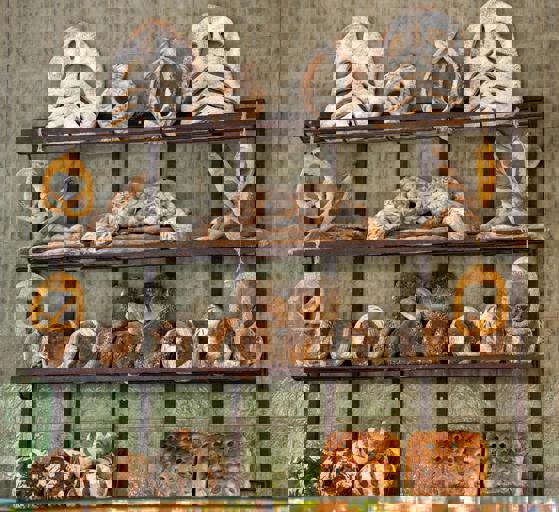
In a city known for its diversity and culinary creativity, one small bakery in Toronto is making waves with an unlikely ingredient: seaweed. The Little Loaf, a cozy storefront nestled in the busy Queen Street West district, has rocketed to new heights of popularity after introducing breads infused with locally sourced seaweed. The bakery’s bold move not only piqued the curiosity of foodies but also united a community seeking innovative, sustainable flavors.
Owner and head baker Maya Singh credits her grandmother’s coastal Indian recipes for inspiring her initial exploration of edible sea plants. “Seaweed has a subtle, umami-rich character I’ve always loved,” Singh shares, surrounded by racks of golden-brown loaves. Her team began experimenting with different seaweed varieties, eventually settling on kelp and dulse harvested from the cold, clean waters off Nova Scotia’s coast. Each bread batch reflects a deliberate choice for supporting Canadian producers.
Customers initially arrived with skepticism, but curiosity quickly transformed to enthusiasm. “It’s delicious, and surprisingly delicate,” remarks Tim Cheung, a regular at The Little Loaf. Others echo his sentiments as word spreads through social media and bustling streets. The bakery's Instagram account tripled its followers in just three months, propelled by posts of emerald-flecked loaves and creative sandwich suggestions. Local food bloggers and critics were quick to take notice, prompting glowing reviews.
From a nutritional standpoint, the switch carries substantial benefits. Seaweed is rich in minerals such as iodine, magnesium, and iron—nutrient boosts not commonly found in traditional bread. Toronto dietitian Emily Wu explains, “Incorporating seaweed elevates the bread's health profile without sacrificing taste or texture.” Wu cites the lower environmental footprint of seaweed farming compared to wheat or rye, highlighting how sustainable choices are capturing the attention of health-conscious Canadians.
Singh’s partnership with Maritime seaweed farmers has also been praised for supporting regional economies. Liam O’Madden, a kelp harvester from Cape Breton, notes, “Demand from urban businesses like Maya’s bakery allows us to maintain traditional, environmentally friendly harvesting.” This fruitful collaboration ensures a steady income for coastal communities and connects urban consumers to food sources outside the industrial agriculture mainstream—an increasingly important issue in today’s food discussions.
In an ever-evolving culinary scene, seaweed bread has broken through cultural barriers as well. The Little Loaf’s customers span all backgrounds—reflecting Toronto’s deep multicultural roots. Singh has responded by offering breads inspired by Norwegian Rugbrød, Japanese Shokupan, and even classic Canadian sourdough, each with a marine twist. “We wanted our breads to be a canvas for many cultures, all bound together by this incredible local ingredient,” Singh explains.
The environmental benefits of seaweed are increasingly resonating with Torontonians. A report by the Canadian Aquaculture Industry Alliance states that seaweed cultivation absorbs carbon dioxide, helping combat climate change. This ecological advantage appeals particularly to young, environmentally conscious consumers. Lineups out the bakery’s door often feature university students and local activists who praise The Little Loaf for taking real, tangible steps toward sustainability while producing highly craveable food.
Looking ahead, Singh is already working on new menu items using seaweed, including muffins, crackers, and even gluten-free options. She regularly hosts tasting sessions and workshops on sustainable food sourcing. “Community engagement is at the heart of this bakery,” Singh emphasizes. These events draw both loyal patrons and newcomers alike and demonstrate how a single ingredient can spark conversations around food, environment, and culture.
As Toronto’s food landscape continues to evolve, The Little Loaf’s seaweed-powered creations are more than a passing trend. They stand as a testament to the city’s openness to fusion and its commitment to both sustainability and flavor. With each slice, customers participate in a uniquely Canadian story—one where tradition and innovation rise together, yeast-like, creating something entirely their own. The bustle around The Little Loaf shows no sign of slowing anytime soon.