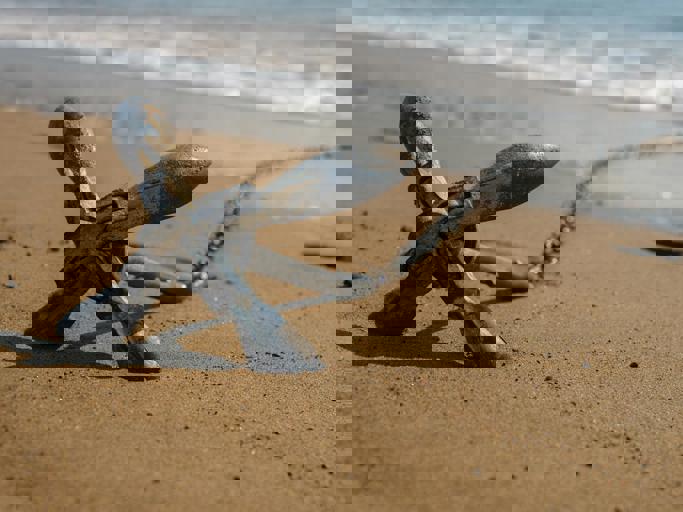
A mysterious metallic object has alarmed and intrigued residents of Nova Scotia’s rugged Atlantic coast after it was discovered washed up on a stretch of remote shoreline near the village of Advocate Harbour. The object, a heavy, cylindrical artifact made of polished metal, was spotted by amateur beachcomber Elizabeth MacGregor while she was out walking her dog early Saturday morning. "It was unlike anything I've ever seen," MacGregor recounted, describing the object as "totally out of place against the rocks and driftwood."
Soon after the discovery, word spread quickly through local communities, prompting a wave of visitors and onlookers who arrived to catch a glimpse of the unusual find. Both curious locals and tourists, some traveling from neighbouring towns, gathered near the shore armed with smartphones and cameras, eager to document what many described as a scene akin to a science fiction movie. The gathered crowd fostered a buzz of excitement and speculation, with theories ranging from satellite debris to submerged relics from Nova Scotia’s maritime history.
Upon further inspection, the metallic cylinder was estimated to be roughly two metres in length and forty centimetres in diameter. Its surface was smooth, unmarked by the typical corrosion or barnacle growth expected on objects long exposed to saltwater. This peculiar freshness—and the lack of identifiable markings—stoked further intrigue. "We don’t see anything that matches this in our records," stated local historian and museum curator John Lambert. "It doesn’t resemble old ship fittings or navigational gear from any known wrecks in this area."
Within hours, local authorities cordoned off the area to prevent tampering and to ensure public safety, emphasizing that the object's origin, and any potential risks associated with it, were still unclear. "Whenever we encounter an unidentified object, especially one crafted from unknown materials, it’s important to treat it with caution until experts can analyze it," explained Constable Clara Rideout, who was among the first officials to arrive on the scene. Rideout confirmed that samples would be taken for scientific testing.
The Nova Scotia Department of Natural Resources and Renewables was notified and promptly dispatched a team of environmental scientists and engineers to the site. According to the department's spokesperson, Dr. Anil Khanna, the object’s composition would be tested for traces of radiation, chemical residues, or rare alloys. "Our initial survey suggests the object is non-radioactive and stable, but it’s too early to draw conclusions. We'll conduct a full metallurgical analysis," Dr. Khanna said during a press briefing.
The discovery quickly attracted national attention, as news outlets and online forums picked up the story. Social media exploded with speculation, with users debating the object’s possible connections to aerospace, military, or even extraterrestrial technology. Hashtags such as #NovaScotiaCylinder and #MetalMystery began trending on Canadian Twitter, reflecting a swell of public interest. Some users compared the incident to previous discoveries of wartime debris and space junk found along Canada’s coasts in past decades.
Skeptics were quick to offer alternative explanations, suggesting the object could be a discarded ballast tank from a passing cargo ship, or a component lost overboard by an offshore oil operation. Maritime expert Luc Tremblay weighed in, saying, "Every year, thousands of tonnes of equipment go missing from ships in the North Atlantic. While most are recovered or reported, a few washed up items defy immediate identification." However, the object's pristine condition remained the dominant argument against these conventional theories.
In contrast, a portion of the local Mi’kmaq community expressed spiritual curiosity about the object’s appearance, drawing attention to the traditional significance of rare finds from the sea. Elder Shelley Bernard remarked, "We believe everything that comes ashore carries its own story and meaning. Whether it’s natural or human-made, we approach it with respect, listening to what it might teach us." This cultural perspective added another dimension to the ongoing discussion.
Meanwhile, the Canadian Space Agency (CSA), in response to public demand for answers, released a statement clarifying that there were no recent rocket launches, satellite re-entries, or space debris impacts recorded over Atlantic Canada in the past month. CSA spokesperson Amira Proulx confirmed, "At this time, we can’t link this object to any known Canadian aerospace activity. However, we remain available to assist local authorities with further investigation if requested."
With official channels still seeking answers, the object has fueled a string of community events, including impromptu gatherings, storytelling circles, and even a pop-up public art display. Local artist Duncan Foley created sculptures inspired by the object, exhibiting them outside the village hall. "It’s brought us together in a unique way," Foley said, "reminding us that even a small mystery can spark creativity and conversation." The influx of visitors has also given a modest boost to nearby businesses.
Environmentalists have raised concerns about possible ecological impacts linked to unknown debris appearing on coastal habitats. Heather O’Neill, a biologist with the Bay of Fundy Conservation Association, warned that even objects seeming inert could pose risks to wildlife, especially if they contain hidden toxins or disrupt shorebird nesting areas. "We must balance public fascination with responsible stewardship" O’Neill stated, urging a thorough environmental assessment before the object is moved or displayed elsewhere.
As laboratory tests continue and experts search for clues, Nova Scotians are left to ponder the origins of the enigmatic cylinder. For now, the object remains under guard, drawing fascination from all quarters and uniting the region in curiosity. The final results of the scientific analysis, expected later this month, should provide clarity, but until then, Nova Scotia’s metallic mystery stands as a compelling reminder of the province’s deep connections to both the sea and the unknown.